

PPA vs CAPEX Solar: The First Step to Smarter Solar Investment
Choosing the right financing method for your solar installation is just as important as selecting the right technology. PPA vs CAPEX Solar is one of the most common dilemmas faced by businesses and institutions transitioning to solar energy. Each model offers distinct financial, operational, and ownership advantages. Understanding their differences can help you unlock real long-term savings.
What Is the PPA vs CAPEX Solar Debate About?
The debate around PPA vs CAPEX Solar revolves around two different financing approaches to adopting solar energy:
CAPEX (Capital Expenditure Model)
In the CAPEX model, the end user purchases the solar power system upfront and owns the asset. The organization invests capital, takes responsibility for operations and maintenance, and enjoys the long-term energy savings.
PPA (Power Purchase Agreement Model)
Under the PPA model, a third-party solar developer installs and operates the system. The end user signs a contract to buy the generated power at a pre-agreed tariff without owning the asset or making a capital investment.
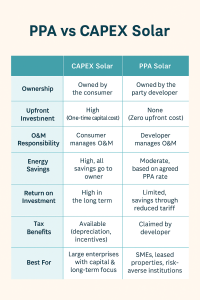
Financial Comparison – PPA vs CAPEX Solar
Initial Investment
-
CAPEX Solar: Requires a large upfront investment.
-
PPA Solar: Zero upfront investment; only pay per unit of electricity consumed.
Return on Investment (ROI)
-
CAPEX Solar: Higher long-term ROI since all energy savings go to the owner.
-
PPA Solar: Lower ROI, but no capital risk involved.
Operating Expenses
-
CAPEX Solar: The owner is responsible for operations and maintenance.
-
PPA Solar: The provider manages O&M, reducing long-term workload.
Ownership & Control in PPA vs CAPEX Solar
Ownership affects not just savings but also system flexibility and benefits like tax credits.
-
In CAPEX Solar, you own the solar asset, allowing you to claim depreciation and tax incentives.
-
In PPA Solar, the asset is owned by the provider, who claims incentives while you get energy at a reduced rate.
Risk and Responsibility – Who Handles What?
CAPEX Solar shifts all risks (performance, maintenance, repair) to the owner, while PPA Solar keeps risks with the developer. If your organization prefers control and has in-house expertise, CAPEX is more attractive. For risk-averse firms, PPA vs CAPEX Solar leans in favor of PPA.
Ideal Scenarios for PPA vs CAPEX Solar
CAPEX Solar Is Ideal If You:
-
Have upfront capital to invest.
-
Want full control and ownership.
-
Can claim depreciation and tax benefits.
-
Have a long-term business horizon.
PPA Solar Is Ideal If You:
-
Prefer zero investment in infrastructure.
-
Want predictable monthly payments.
-
Lack internal solar expertise.
-
Are a tenant or have a short to medium-term outlook.
Environmental Impact of Both Models
Regardless of the model, both reduce carbon emissions and reliance on fossil fuels. A 100 kW solar system offsets ~140 tons of CO₂ annually. In the PPA vs CAPEX Solar comparison, both models contribute to sustainability goals—it’s the financial path that differs.
Conclusion: Which Solar Model Should You Choose?
The PPA vs CAPEX Solar decision depends on your business’s financial capacity, long-term vision, and risk appetite. If you can invest upfront and want full control and higher long-term savings, CAPEX Solar is the way to go. If you prefer to avoid investment and delegate responsibilities, PPA Solar is ideal.
Both models lead to energy cost reduction and environmental benefits. The real question is not whether to go solar—but how.
Final Thought
Whether you choose PPA or CAPEX, transitioning to solar energy is a strategic move that future-proofs your energy needs and boosts your organization’s green credentials.